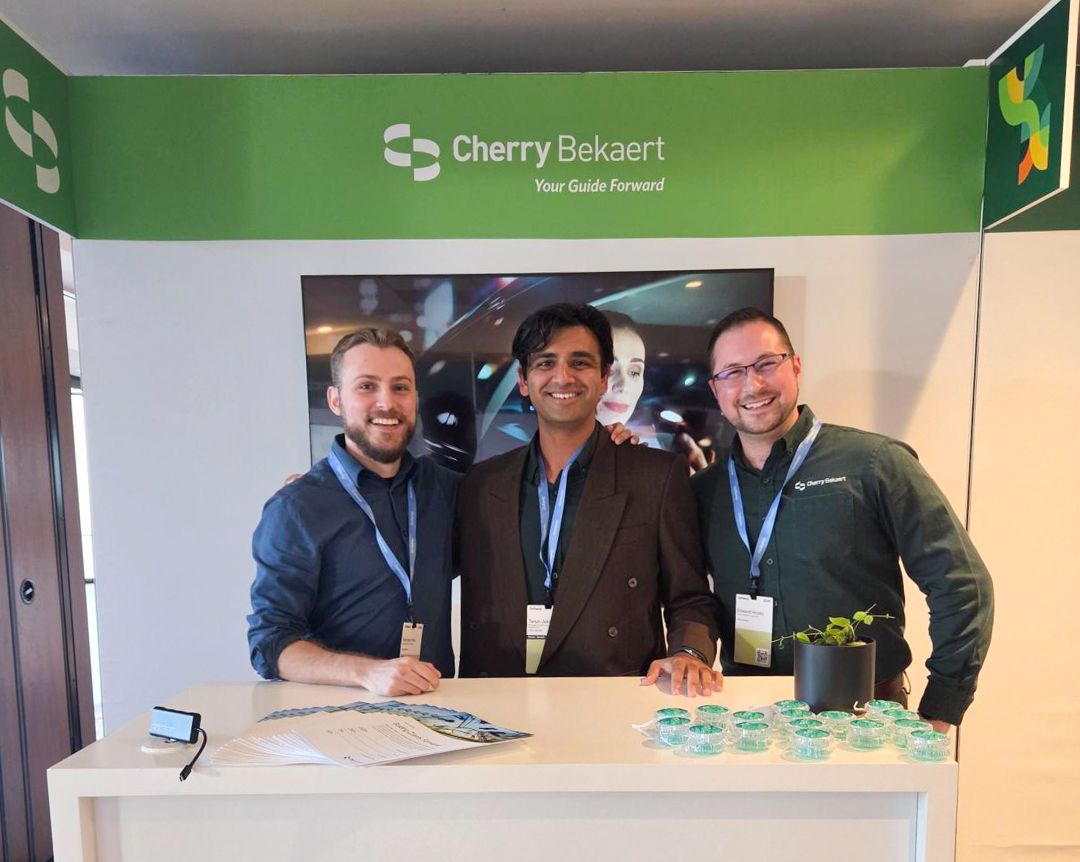
Tarun Jakkaraju Cherry Bekaert’s AnyWare Apps, shared this session with finance leaders at Ramp’s OnRamp 2026 in San Francisco.
Every finance leader has inherited a stack they didn’t quite build. Our session opened with that idea and with a story about a CFO we’ll call Nick.
Nick’s spreadsheet
Nick came to us because he knew something was off. We implemented Sage for him, covering the chart of accounts, integrations, workflows, and reporting. A typical implementation takes about three months, and his took six.
The reason was a legacy workbook he’d used for years. It was how he read his numbers and made decisions, and he couldn’t let it go. Every time he opened it, his team had to keep it current, which meant maintaining the old workflow instead of learning the new one. The turning point was a conversation, not a software change. Once Nick retired the workbook, the implementation finished.
A couple of years later he asked us to implement Ramp, and it went smoothly. He was a different client by then, because he knew what the work required.
Why the patchwork stack is a resilience risk
Most finance stacks follow the same story: a simple accounting system, then a billing tool, expense management, AP automation, payroll. A controller builds a workbook, then someone in rev ops builds another on top of it, because nobody trusts the numbers. Three years later the company is five times larger and nobody can say where the source of truth lives.
Controller tenure in the US averages 36 months, so most teams will lose their controller within a few years. Hiring a replacement can take three to five months, and in the meantime “Jill, the AP clerk” holds the close together without a title change or a raise. Every CFO knows a Jill.
That’s why modernizing the stack is a resilience project, not a technology project. The goal is to keep the business running when someone leaves, so Jill isn’t the last line of defense.
Six warning signs
Hold these against your own organization:
- Close takes longer every quarter despite added headcount
- Reporting depends on exports, rework, and version control by email
- Key processes depend on one person
- Spreadsheets answer questions your system can’t
- Approvals and controls live outside the system of record
- New entities, currencies, or lines of business break the model
Nodding at two is normal. At four, the talk was probably for you.
Choosing the right partner
We were candid about the industry’s “bait and switch,” where a strong sales team wins the deal and a different team does the work. Our advice is to ask about the people as much as the tool. These questions help:
- Who will be on my team at day 90? Not who sold the project.
- Can I talk to references from more than a year ago? Go-live is easy to praise.
- How will you handle the processes that live in Excel and email? A good partner surfaces and rebuilds them.
- What does your exit plan look like? A good implementation partner is like a good contractor: they do the work, hand over the keys, and don’t move into your spare bedroom.
Where the real ROI is
When you time-track a typical accounting team for a month, most spend about 60 to 80 percent of their week on data movement and reconciliation, not analysis. It’s like hiring a Michelin-star chef and having them wash dishes all day. Modernizing gets the chef back in the kitchen. The number a board cares about is better decisions, not a smaller team.
That leads to the reframe we asked the room to take home. When close runs late, the instinct is to hire another accountant. Usually, though, manual work signals that the system is asking people to do what the system should do. Before approving the next headcount request, ask whether you’re solving the problem or adding people to a symptom.
What a good engagement looks like
We described five phases: discover (two to four weeks of mapping, with a written assessment rather than a proposal), plan (a phased roadmap you can defend to your board), program management (a named owner and a weekly cadence), AI adoption (treat it like a brilliant intern: fast, confident, occasionally wrong, and in need of supervision), and deliver (a documented stack your team can run without the partner by month 12).
Three rules held up across implementations:
- Sponsor it visibly. The CEO should back it publicly, beyond approving budget.
- Chase small wins. Skip the big bang. A report that took three days now takes a few hours, and that buys patience for harder work.
- Fix the process first. Automate a bad process and you get bad results, faster. The best question during implementation is “why do we do it this way at all?”
The hard part is the leader
The most honest section of the talk was about Nick’s own habit. The last person to adopt a new system is usually the leader, who has the most riding on the numbers and the board to answer to. Leaders who make it through share three traits. They admit they’ll be the hardest adopter, they move their own reporting onto the new system early, and they stay patient, because the first close in the new system isn’t the one that proves the ROI, the sixth is.
Three takeaways
- Evaluate the stack against where you’re going. A finance function built for a $50 million company can’t run a $200 million one.
- Treat manual work as a signal, not a cost. It’s a systems problem asking to be diagnosed.
- Plan for adoption from day one. A system that goes live but isn’t adopted is worse than the one it replaced, because now you’re paying for both.
And one question to ask before adding any tool to your stack: does this reduce the number of places my data lives, or add to them? Ramp earns its place when it replaces card programs, expense tools, and bill pay on one platform. Consolidation is what creates value, and addition creates the next patchwork.
Every organization has a version of Nick’s spreadsheet. A good partner helps you see it, name it, and retire it, starting with your own.
Want to talk through your stack? Cherry Bekaert is a Platinum partner for both Sage and Ramp, with a team that supports every major ERP. Get in touch at ramp.anywareapps.com.

Time is money.
Book your discovery call with AnyWare Apps
Sage 300 Discovery Request
Our Solution for Your Accounting
Our integration streamlines your financial workflows by directly integrating credit card transactions, employee reimbursements, and vendor invoices into your Sage system. This seamless connection...
Eliminates manual data entry, reduces errors, and ensures your books are always accurate and up to date
Learn More From AnyWare Apps